
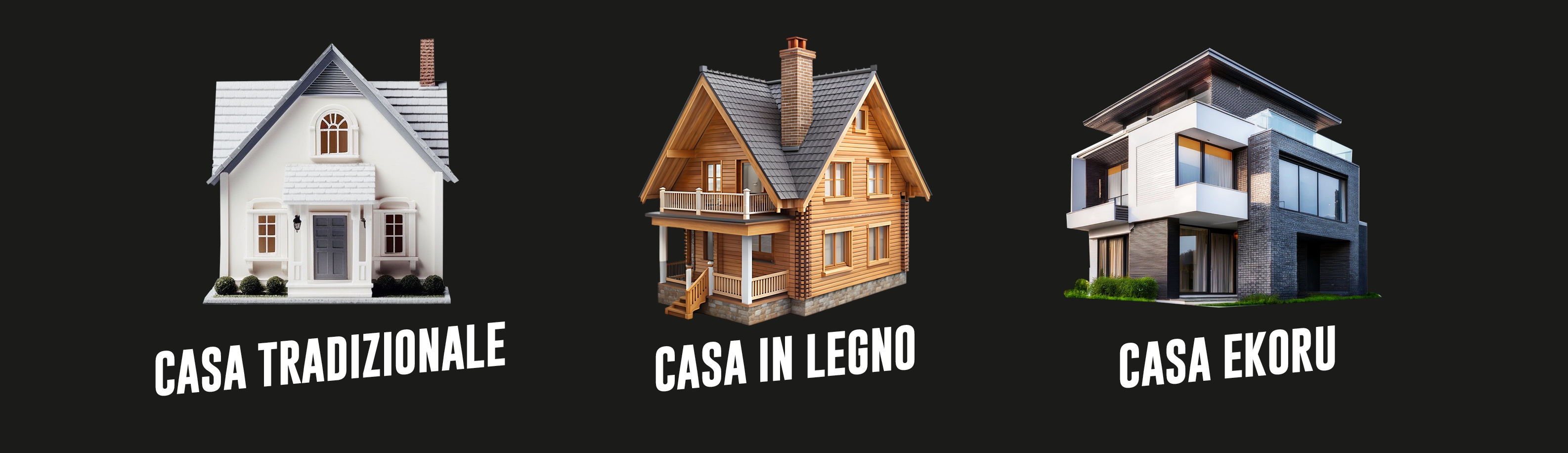
Traditional house, wooden house or Ekoru house? Discover the best system for living in the future
When it comes to building a house, choosing the construction system is one of the most important decisions. Today we examine three very different alternatives: the traditional masonry house, the wooden house and the Ekoru house, our patented system that combines innovation, sustainability and industrial precision.
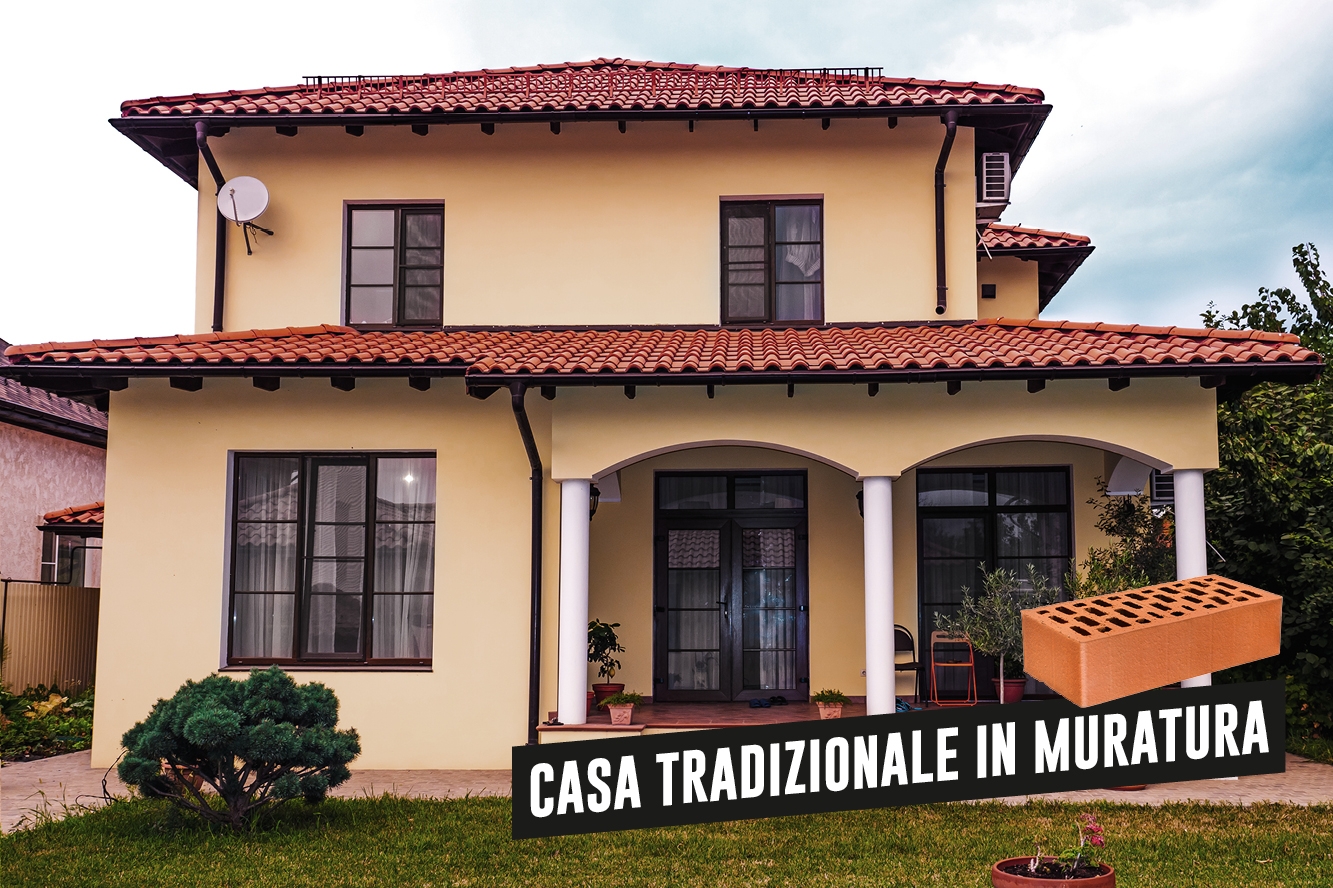
1. Traditional masonry house
The traditional house is built with conventional techniques, often in bricks and reinforced concrete, to which an insulating layer is added to improve energy efficiency. This layer can be internal or external, but in any case it represents an additional element with respect to the load-bearing masonry. This layering, although effective in the short term, can lead to issues with durability, maintenance and breathability over time, especially if the materials used are of low quality or if the intervention is not carried out properly. In addition, if the layer is made with unsustainable materials, the construction is less ecological in its life cycle.
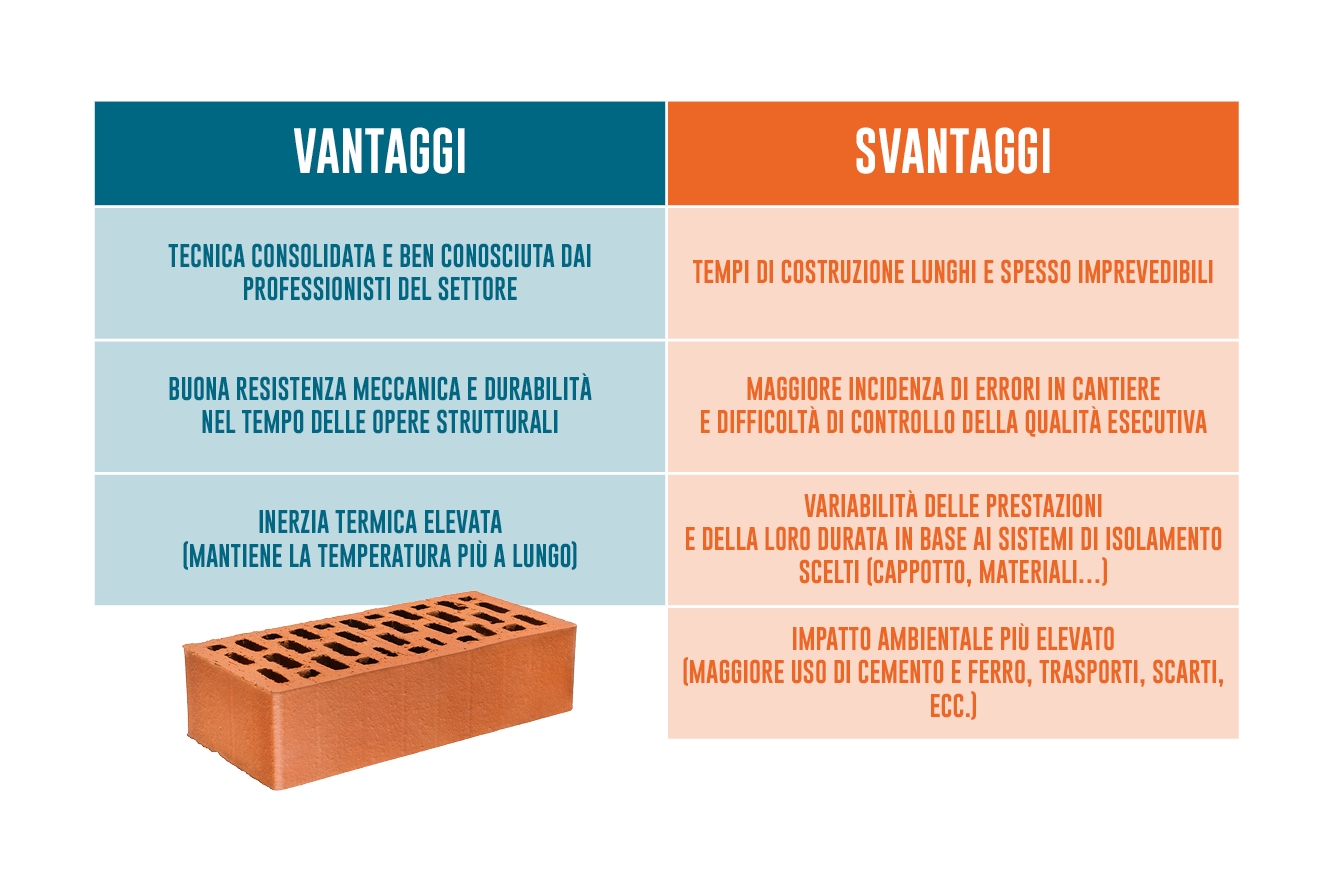
Pros:• A well-established technique that is well known by professionals in the sector.
• Good mechanical strength and durability of structural works over time.
• High thermal inertia (holds temperature longer).
Cons:
• Long and often unpredictable construction times.
• Increased incidence of errors on site and difficulties in controlling executive quality.
• Variability in performance and durability depending on the insulation systems chosen (layer, materials...).
• Higher environmental impact (greater use of cement and iron, transport, waste, etc.
2. Wooden house
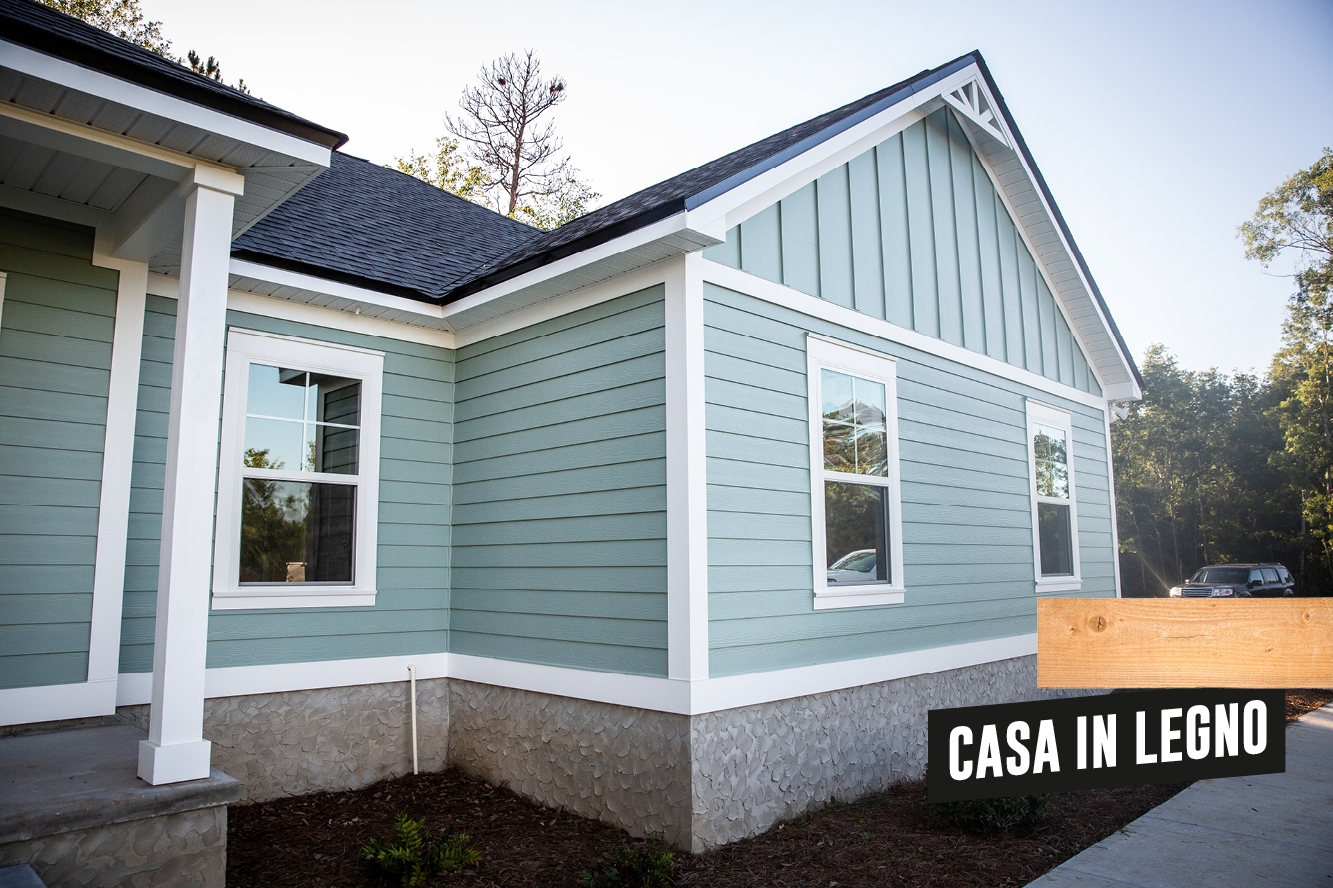
The wooden house is increasingly appreciated for its lightness, speed of construction and reduced environmental impact. However, it is not automatically synonymous with sustainability or high performance.These constructions require an effective insulation system, which can be installed as an external layer or in a cavity, inside the structure itself.
The quality of the insulation makes all the difference: using low-cost or non-breathable materials can compromise the durability of the building and living comfort, causing moisture accumulation, poor breathability and higher maintenance costs over time. In addition, wood is an organic material, which has excellent qualities but must be carefully protected to ensure durability.
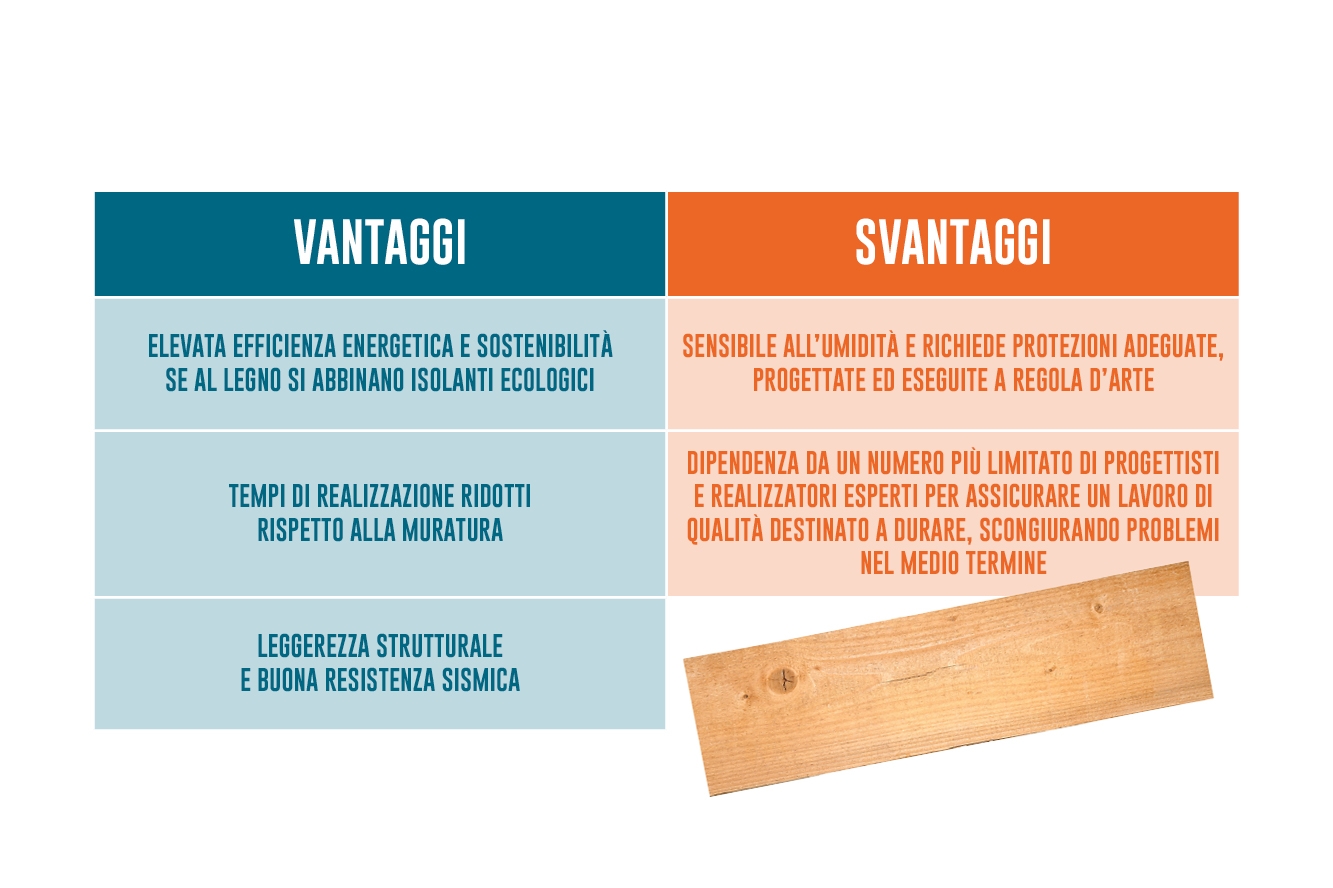
Pros:
• High energy efficiency and sustainability if ecological insulators are combined with wood.
• Reduced construction times compared to masonry.
• Structural lightness and good seismic resistance.
Cons:
• Sensitive to moisture and requires.
adequate protections, designed and executed to perfection.
• Dependence on a more limited number of experienced designers and builders to ensure quality work that will last, avoiding problems in the medium term.
3. Ekoru house– the building system of the future
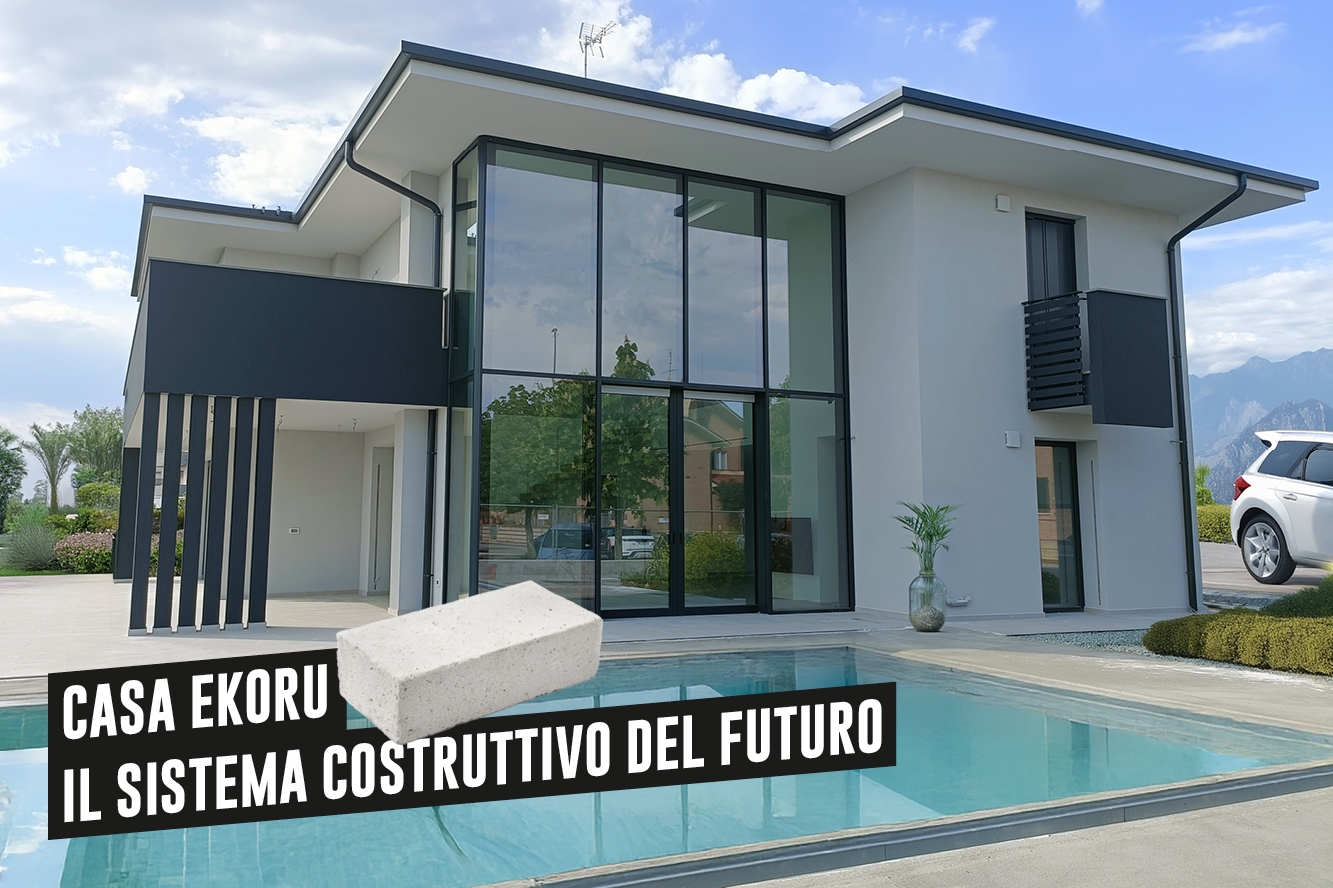
The Ekoru house represents a new generation of sustainable construction. Unlike traditional techniques and standard wooden houses, it does not use a layer: neither exterior nor interior. The heart of the Ekoru system is the breathable monolithic masonry, which guarantees insulation, thermal inertia and healthy indoor conditions in a single structural solution.
The load-bearing structure is made of laminated wood, chosen for its strength and lightness, protected with the same materials as the masonry ensuring long-term durability without compromise. They are built with a custom engineered system, based on finished elements built in the factory with patented technologies. Each component arrives on site ready for assembly, guaranteeing precision and speed.
The result is a solid, breathable and natural house, where every material is chosen to guarantee living comfort, energy efficiency and real sustainability, without additions, without compromises.
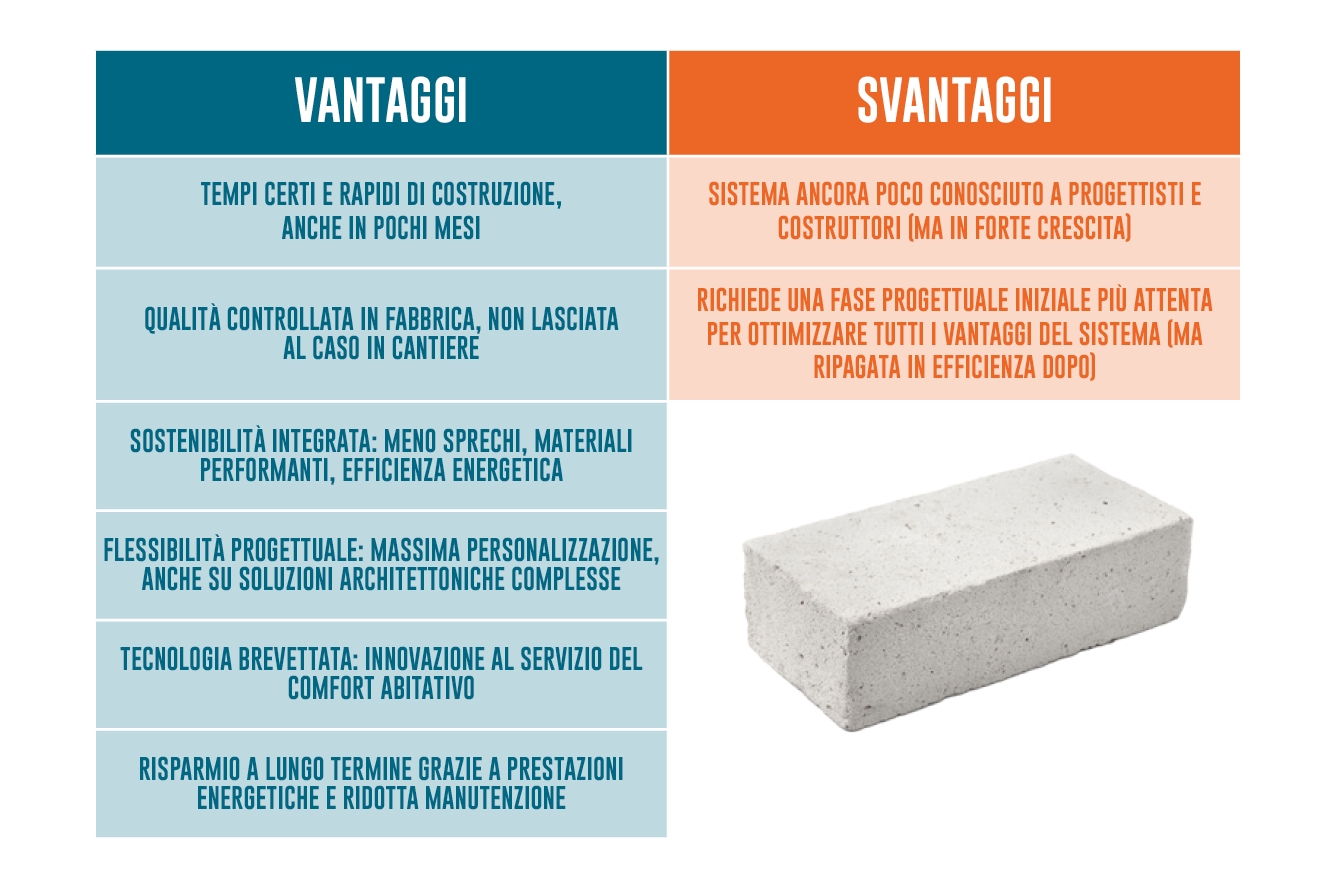
• Fast and reliable construction times, even in a few months.
• Quality controlled in the factory, not left to chance on site.
• Integrated sustainability: less waste, high-performance materials, energy efficiency.
• Design flexibility: maximum customisation, even on complex architectural solutions.
• Patented technology: innovation at the service of living comfort.
• Long-term savings thanks to energy performance and reduced maintenance.
Cons (real or perceived):
• System still little known to designers and builders (but in strong growth).
• Requires a more careful initial design phase to optimize all the advantages of the system (but paid for in efficiency later).
Why live in an ekoru house?
Because an Ekoru house is designed, built and lived according to a new logic: that of industrial precision applied to construction, combined with design freedom and respect for the environment. It is the house that combines the best of worlds: the solidity of traditional construction, the speed of prefabrication, and the efficiency of a patented and certified system. In a world that requires sustainability, comfort and speed, Ekoru provides a practical solution to the needs of contemporary living.